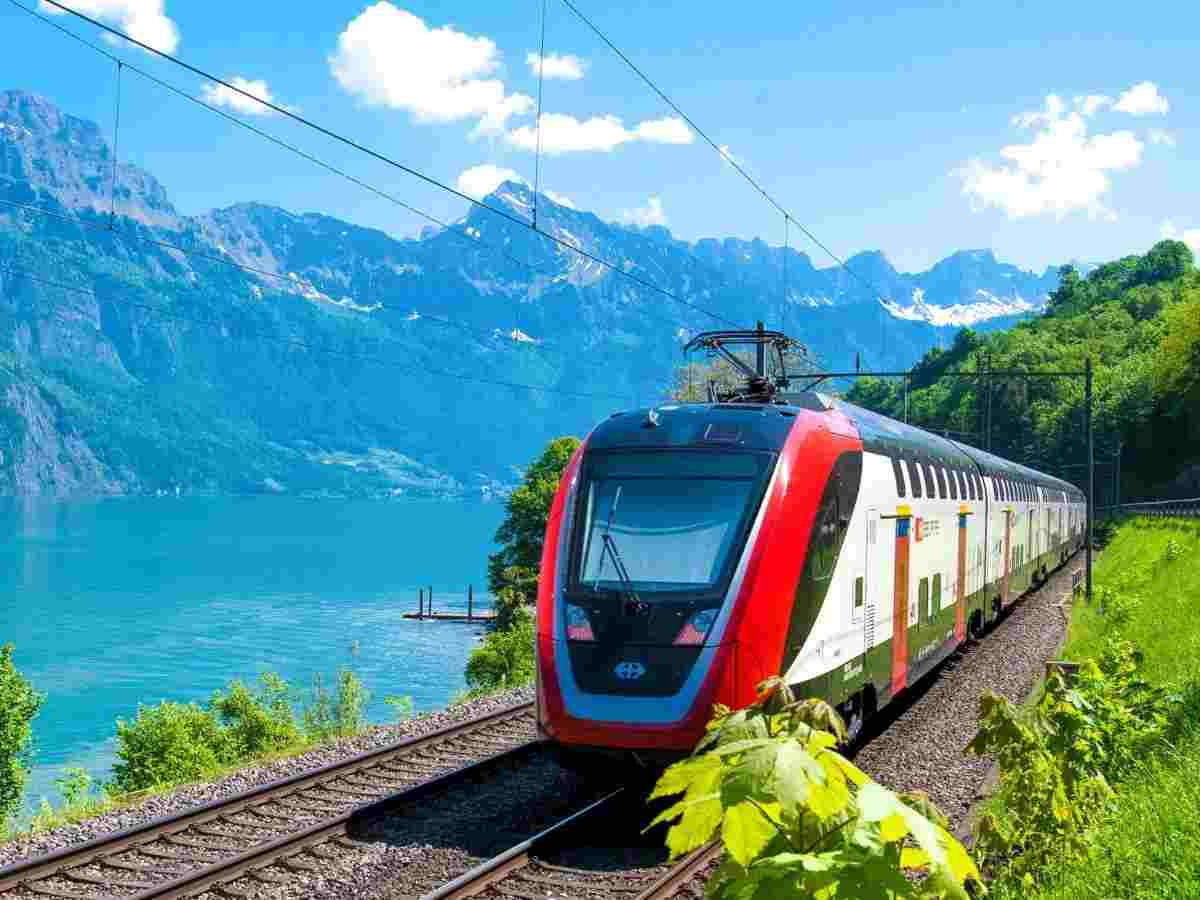
The email was short. “Oliver, I have 30 days and €3,000. Can I backpack Europe?” It came from a reader named Hannah, 23, first big trip. She wanted to see seven countries. She’d heard about Interrail passes and hostel dorms. She’d also heard that Europe was expensive. She was scared she’d run out of money in week two.
I wrote back: “Yes, but you have to be smart. €100 a day is comfortable. €80 is tight. €60 is possible but you’ll skip a lot.”
She chose €80 a day – €2,400 for 30 days, plus €600 for transport and a buffer. She did it. She came home with €47 left. Her email to me after the trip: “I ate pasta in Rome, drank wine in Paris, and slept in a 24-bed dorm in Berlin. I wouldn’t change a thing.”
The Trip Cost Estimator was her guide.
She set her daily limit at €80. Then she broke it down: hostel €25, food €25, transport €10, activities €15, miscellaneous €5. That left €0 buffer – risky, but she had a €600 transport budget separate.
The Multi‑City Trip Cost Calculator helped her decide which cities to visit.
She entered her must‑see cities: London, Paris, Amsterdam, Berlin, Prague, Vienna, Budapest. The tool estimated total cost including trains between them. The number came back at €3,800 – way over her €3,600 total (€3,000 spending + €600 transport). She dropped London. London was the most expensive – hostels €35-50, transport €10 per day, food €25. Removing it saved €600. She added Krakow instead.
Her final route: Paris (4 nights), Amsterdam (3), Berlin (4), Prague (4), Vienna (3), Budapest (4), Krakow (4). Thirty nights. She booked all her hostels through Hostelworld, filtering by rating (8.5+) and price (under €30). She paid an average of €23 per night.
City-by-city breakdown (per day, mid-range backpacker budget)
Paris – €90. Hostel €30 (dorm in the 9th or 10th arrondissement). Food €25 (croissant and coffee €5, lunch from boulangerie €7, dinner from street food or supermarket €13). Transport €10 (carnet of 10 metro tickets). Activities €20 (Louvre €17, but she only went once; on other days she walked). Miscellaneous €5. She saved by eating picnics on the Seine.
Amsterdam – €85. Hostel €30 (outside the centre). Food €20 (supermarket breakfast, frites for lunch, one cheap dinner). Transport €5 (walked everywhere). Activities €20 (Anne Frank House €16, booked two months in advance). Miscellaneous €10. She skipped the Heineken Experience (€25) because it was over budget.
Berlin – €70. Hostel €20 (cheap dorms in Friedrichshain). Food €20 (currywurst, döner, supermarket). Transport €10 (day ticket for U-Bahn). Activities €15 (Reichstag dome free, East Side Gallery free, Berlin Wall memorial free). Miscellaneous €5. Berlin was her cheapest major city.
Prague – €65. Hostel €15 (dorm in Žižkov). Food €20 (goulash, dumplings, beer – beer is cheaper than water). Transport €5 (tram ticket). Activities €10 (Prague Castle complex €8, Charles Bridge free). Miscellaneous €15. She took a day trip to Kutná Hora (bone church) – extra €20.
Vienna – €85. Hostel €25 (dorm in the 7th district). Food €25 (schnitzel, cake at Demel, sausages from Würstelstand). Transport €10 (day ticket). Activities €20 (Schönbrunn Palace €16, opera standing ticket €4). Miscellaneous €5. She splurged on a concert in a historic hall – €30 extra.
Budapest – €60. Hostel €15 (party hostel in the Jewish Quarter). Food €15 (goulash, lángos, paprika chicken). Transport €5 (day ticket). Activities €10 (thermal baths €20 every other day, averaged out). Miscellaneous €15. She did a ruin bar crawl – €15.
Krakow – €65. Hostel €15 (dorm in Kazimierz). Food €15 (pierogi, zapiekanka). Transport €5 (tram). Activities €25 (Auschwitz tour €25, salt mine €30 – she chose Auschwitz). Miscellaneous €5. She skipped the salt mine to save €30.
Her actual spending after 30 days: food €740, accommodation €690, transport local €180, activities €450, miscellaneous €250. Total €2,310. Plus trains between cities €520. Grand total €2,830. Under her €3,000 target by €170.
The Interrail pass math
Hannah bought a 7‑day Interrail Global Pass for €280 (youth pass). She used it for long journeys: Paris→Amsterdam, Amsterdam→Berlin, Berlin→Prague, Prague→Vienna, Vienna→Budapest, Budapest→Krakow. She also used a separate ticket for Krakow→Warsaw (her flight home was from Warsaw). She bought that ticket separately for €25.
Was the Interrail pass worth it? She calculated the individual tickets: Paris→Amsterdam €50, Amsterdam→Berlin €70, Berlin→Prague €40, Prague→Vienna €45, Vienna→Budapest €40, Budapest→Krakow €50. Total €295. The pass cost €280. She saved €15. Not a huge saving, but the convenience was worth it – she didn’t have to buy tickets in advance or worry about price surges.
If she had booked trains months ahead, she could have gotten cheaper advance tickets (Paris→Amsterdam €35, etc.). But she booked last minute because she wanted flexibility. For her, Interrail made sense.
The Travel Budget Calculator is simpler but doesn’t include train passes.
Tips for backpacking Europe in 2026
Book hostels with free breakfast. Hannah saved €5-10 per day by eating hostel breakfast – bread, cheese, ham, cereal. That’s €150 over 30 days.
Travel overnight when possible. She took a night train from Prague to Vienna. Saved a night’s accommodation (€20) and arrived early. The Interrail pass covered the sleeper supplement (€15).
Eat supermarket dinner. In expensive cities like Paris and Amsterdam, she bought bread, cheese, tomatoes, and hummus from a supermarket for €5 instead of a €20 restaurant meal. She ate that on a park bench.
Skip the Eiffel Tower summit. It costs €28 and the line is two hours. She walked to the Trocadéro for free photos and went up the Montparnasse Tower for €18 instead – shorter line, better view.
Use free walking tours. Tip €5-10. She learned history, met other travellers, and got restaurant recommendations.
Check if museums have free days. The Louvre is free on the first Friday of the month after 6 PM. She timed her Paris visit to catch that. Saved €17.
Don’t buy bottled water. Tap water is drinkable in most European cities. She carried a reusable bottle and filled it at hostel kitchens or public fountains.
Use city tourist cards for transport. Vienna’s 72‑hour pass cost €17 and covered all public transport. She walked most days but used it for longer distances.
Avoid airport exchange booths. Hannah withdrew cash from ATMs using her Starling card – no fees, real exchange rate.
Hidden costs that caught her
City taxes. Paris charged €5 per night, Budapest €4, Vienna €3. That’s another €50 she hadn’t budgeted. She paid from her miscellaneous fund.
Reservation fees for night trains. Her Interrail pass covered the base fare, but the sleeper reservation cost €15-30 extra. She paid €45 total for two night trains.
Laundry. Every week, €10. She did it in Prague where it was cheapest.
Souvenirs. She budgeted €50 total. She spent €45 on a print from a local artist in Berlin and a magnet from each city.
Her final advice to future backpackers
“Don’t try to see everything. You’ll exhaust yourself. I spent 4 nights in each city. That was enough to get a feel without rushing. My biggest regret is not spending more time in Budapest – I loved it and could have stayed a week.”
She also said “ignore the Instagram influencers who make it look like they’re staying in luxury hotels for €50 a night. They’re lying or sponsored. Hostels are fine. You’ll meet people. You’ll save money. You’ll have more fun.”
Hannah is planning her next trip: South America. She’s using the same tools, but she’s adjusting her daily budget to $50. She’s confident.
“If I can do Europe on €80 a day, I can do anything.”